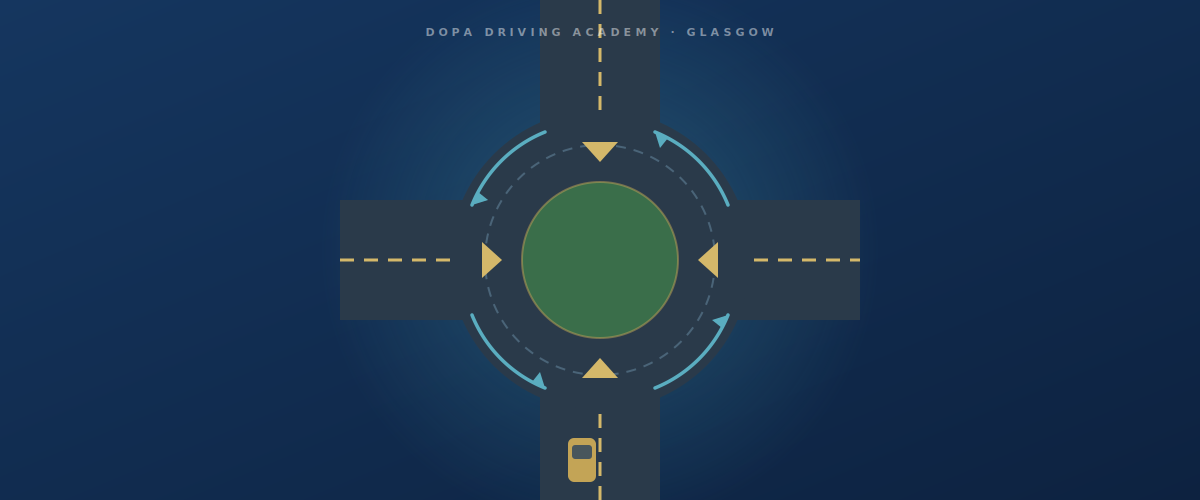
The key to mastering roundabouts is choosing the correct lane early, checking for traffic to your right, and signalling clearly as you approach your exit. Once you break a roundabout down into these three steps, the panic disappears and it becomes one of the most routine parts of driving.
Glasgow has a mix of roundabout types, from small, single-lane mini-roundabouts in residential areas to large, multi-lane roundabouts on routes like the M8 junctions and Charing Cross. At Dopa Driving Academy, roundabout confidence is one of the things we focus on most with new learners, because it's also one of the most common reasons for test faults.
What is the correct lane position on a roundabout?
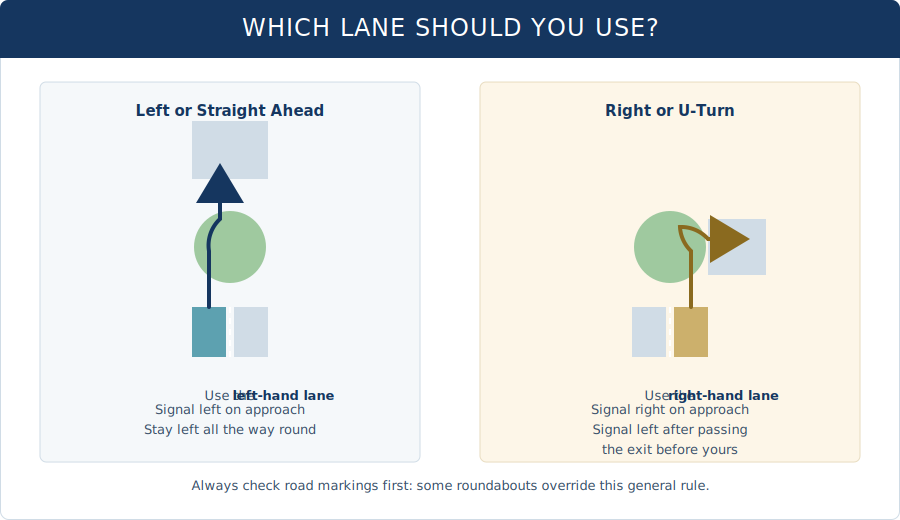
As a general rule, use the left-hand lane if you're turning left or going straight ahead, and the right-hand lane if you're turning right or doing a U-turn. Always check the road markings and signs first, since some roundabouts (especially larger ones) have specific lane instructions that override this general rule.
- Look for lane arrows painted on the road as you approach: these tell you exactly which lane to use for your exit
- If there are no markings, default to left lane for left/straight, right lane for right/U-turn
- Choose your lane early and commit: changing lanes mid-roundabout is a common cause of test faults
When should you signal on a roundabout?
Signal left as you approach if you're taking the first exit, and signal right as you approach if you're going further round. If you're going straight ahead or taking a later exit, don't signal on approach: instead, signal left only once you've passed the exit immediately before yours.
Did you know? Incorrect or missing signals on roundabouts are one of the most frequently recorded driving test faults in Scotland, often because learners forget to signal left on the way out, not just on the way in.
The most common signalling mistake
Many learners signal right when going straight ahead, assuming it shows they're "continuing round." This actually tells other drivers and pedestrians you're turning right, which can cause them to pull out in front of you. Only signal right if you are genuinely turning right or doing a U-turn.
Do you give way to the right on a UK roundabout?
Yes. On every roundabout in the UK, traffic already on the roundabout has priority, so you must give way to vehicles approaching from your right before joining. This applies even if the road looks clear, since cars can appear quickly from larger roundabouts.
- Slow down as you approach and look right to check for oncoming traffic on the roundabout
- Wait for a safe gap, then move off smoothly without hesitating once it's clear
- Maintain your lane position all the way around to your exit
How do you tackle large, multi-lane roundabouts in Glasgow?
Large roundabouts, like those around the M8 and Charing Cross, simply apply the same rules with more lanes and more traffic to track. The key is reading the lane markings earlier and being decisive once you've chosen your lane.
At Dopa Driving Academy, we deliberately practise on Glasgow's busiest roundabouts during lessons, not just quiet ones, so test day traffic never feels unfamiliar.
Summary
Roundabouts become straightforward once you break them into three steps: pick the correct lane early, give way to traffic on your right, and signal clearly on the way out. Practice on a mix of small and large roundabouts builds the confidence that test day demands.
If you're looking for driving lessons in Glasgow with a calm, patient, DVSA-approved instructor, book your first lesson with Dopa Driving Academy today. Our 95% pass rate speaks for itself.